
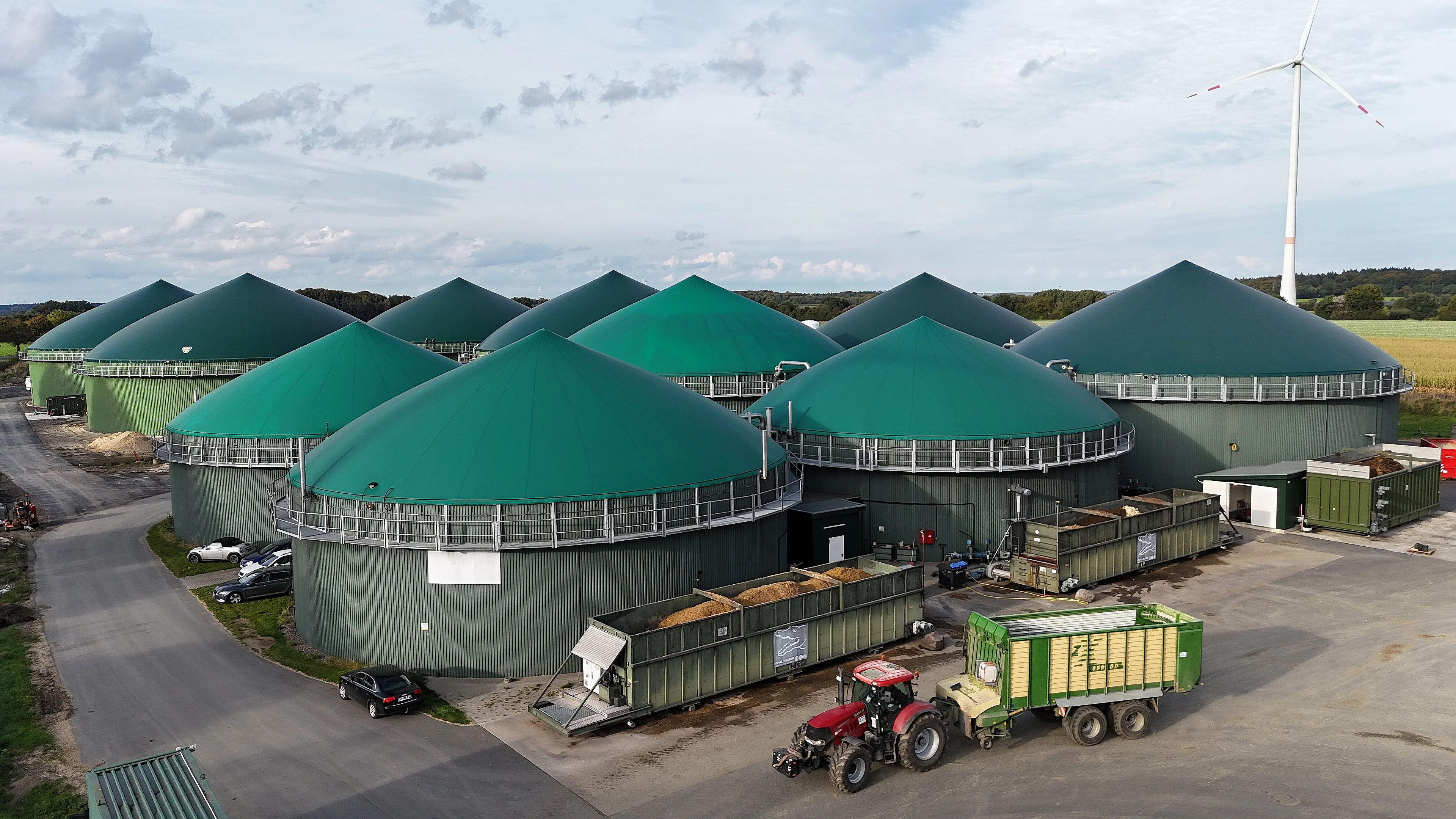
Biogas optimization begins with biology
An efficient biogas plant is created where biological processes operate stably. Many operators are familiar with the challenges: gas production fluctuates, H₂S levels rise, foam forms, or capacity utilization falls short of expectations. This is exactly where true biological process optimization comes into play.


The most common challenges in biological optimization:

Trace Element Deficiency – Plant Performance Declines
When important trace elements are lacking, microorganisms function more slowly.
The consequences: reduced methane production, unstable processes, and more disruptions.

Incomplete substrate digestion
Many plants leave energy trapped in the material.
The consequences: reduced gas production and higher volumes of digested residue.

Excessive sulfur and ammonia pollution
H₂S and NH₄/NH₃ are common problem areas in biogas plants.
The consequences: engine damage, biological stress, and frequent maintenance.

Foam & Biological Turmoil
Overfeeding, changes in parameters, or malfunctions can cause foaming.
The consequences: risks to sensors, equipment, and operational safety.
![[Translate to English:] Sonderfälle](/fileadmin/_processed_/6/2/csm_DJI_20250929111728_0160_D_a84d4fd313.jpg "[Translate to English:] Sonderfälle")
Special Cases & Problematic Substances
Issues that fall outside the scope of “standard biology.” Struvite, MAP, and inhibitors.
The consequences: deposits, blockages, and declining efficiency.